LineageOS for the Sony Xperia 10 VI
LineageOS for the Sony Xperia 10 VI
The Sony Xperia 10 VI is a Sony entry-level to midrange smartphone, originally sold for 399€ with Android 14 in June 2024. It’s based on a Snapdragon 6 Gen 1 SoC, has Sonys unique 21:9 aspect ratio and by modern standards, is “compact”. It comes with a headphone jack and extendable storage via microSDXC. For me the headphone jack is a mandatory phone feature.
The phone is a tad too tall. I was coming from a Samsung S10e, which I still consider as the best smartphone created in terms of feel and size. However, due to the relatively small width of the Xperia 10, it still feels better in the hand than any other modern smartphone I’ve tested. The downside of the all the Xperias (till 2026 releases) is their short guaranteed software support. Sony only offers 3 major of Android updates, and 4 years of security patches. Thus, the last Android version will be Android 16 (released in January 2026).
My initial thoughts for buying the Xperia 10 VI back in winter 2024 was to have small, tinker project I could work on. However, I quickly noticed that no other LineageOS device at that time with this specific Snapdragon chipset existed, and thus porting would require considerably more effort than I wanted to dedicate.
The port
I used Alaska Linux Users “Creating a device tree from scratch” Youtube series, dumpyara and aospdtgen to generate the initial device tree. Special thanks to jmpfbmx and luk1337s Sony Xperia 10 V (pdx235) and Sony Xperia 10 VII (pdx257) ports. These helped immensely as similar devices to constantly compare the Sony Xperia 10 VI port against. Several configuration and missing parameters I could directly infer from their port.
I used Opus 5 heavily to build, flash, and test the adjustments made, e.g. if the proprietary files/blobs extracted from the Sony stock rom are working in the port.
Working features
The Sony Xperia 10 VI is not my main phone, but I tested the following (hardware) features in the port. These is a list of currently working state:
- display and touch,
- Wi-Fi (including the 5 GHz hotspot),
- Bluetooth,
- SMS,
- NFC with the secure element,
- mobile data,
- calls, including VoLTE and Wi-Fi calling,
- GPS,
- audio including the headset jack and bluetooth,
- cameras,
- hardware video decoding,
- eSIM,
- fingerprint sensor,
- sensors,
- no increased battery drain
Apart from that, I tried to adhere as best to the LineageOS charta as possible. Thus,
- SELinux is enforcing,
- no su is preinstalled
- the kernel is build from source
Screenshots
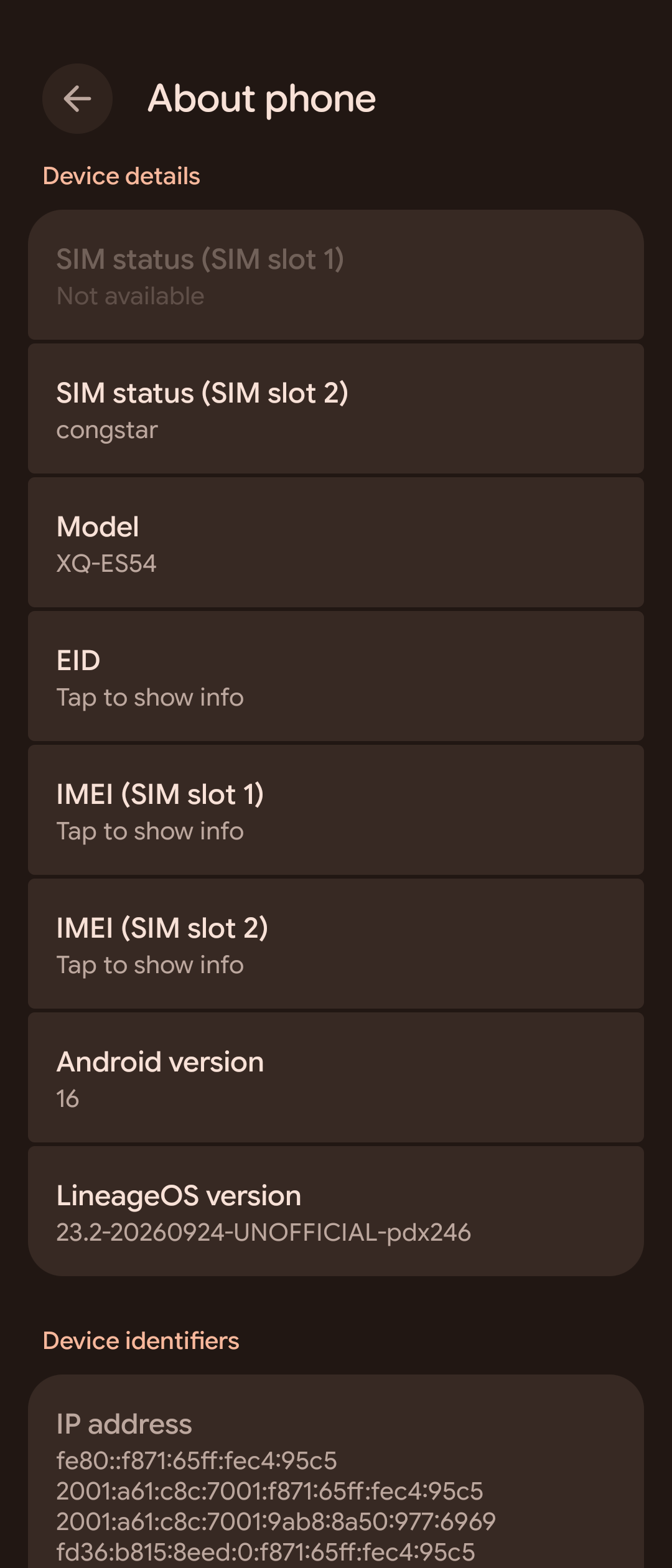
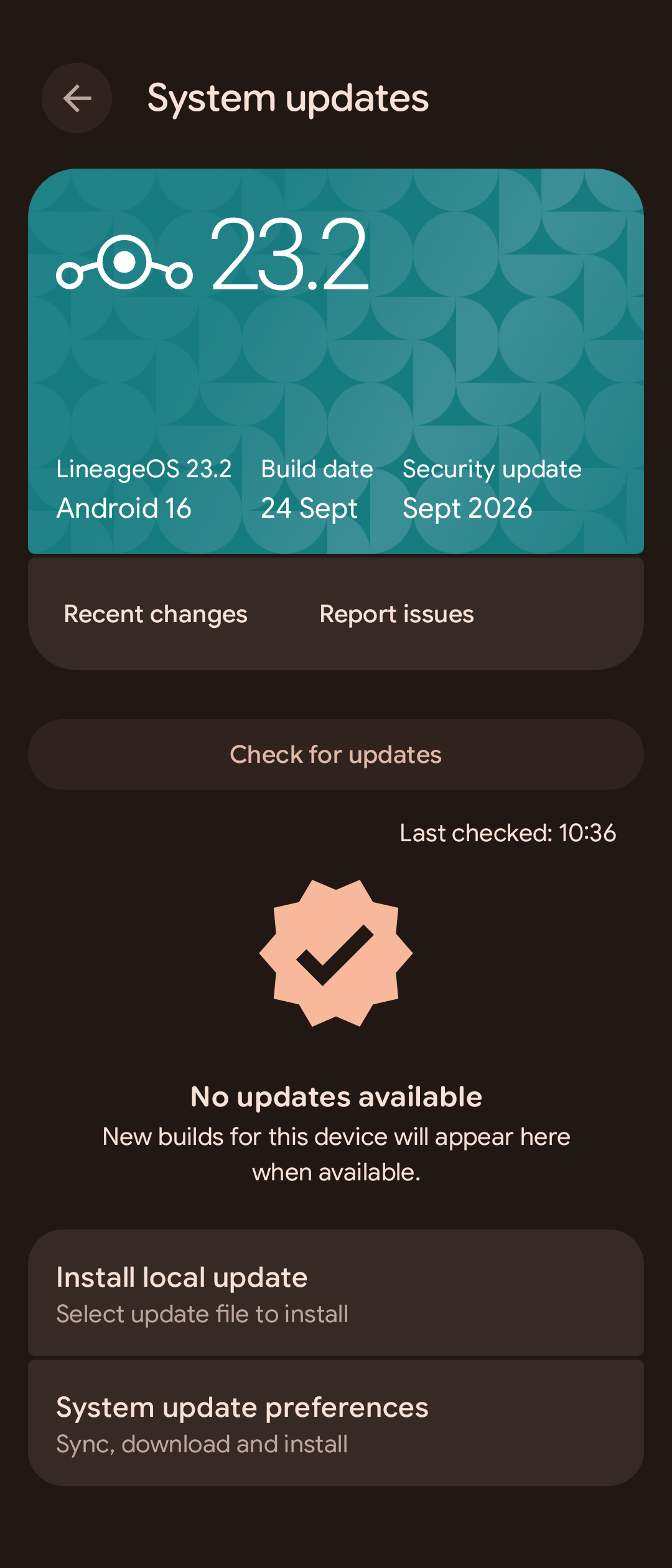
Well, everyone knows how Android looks like, thus, just some system settings screenshots:
Source code and builds
The source code and releases can be found at github:
I currently plan to release every 2-4 weeks a new release based on the current LineageOS code. You can simply flash it over your current installation via fastboot, and then sideloading the Gapps again. No need to wipe data once you’ve installed LineageOS, thus all your settings and data remain on the phone when updating.
Before flashing, make sure you meet the following requirements:
- A XQ-ES54 or XQ-ES72 variant. I only own the XQ-ES54 myself, thus the XQ-ES72 is untested, but should work.
- Your phone is updated to at least any of the 70.2.A.* Sony stock rom version (Android 16).
- Flash it like any other LineageOS Sony ROM. Follow, for example the official lineageOS instruction for the Sony Xperia 10 VII, but with the release files for the Sony Xperia 10 VI.
- If you want to use Google Apps (Gapps), I’ve only tested it with the 16.0.0-arm64 release for LineageOS 23.